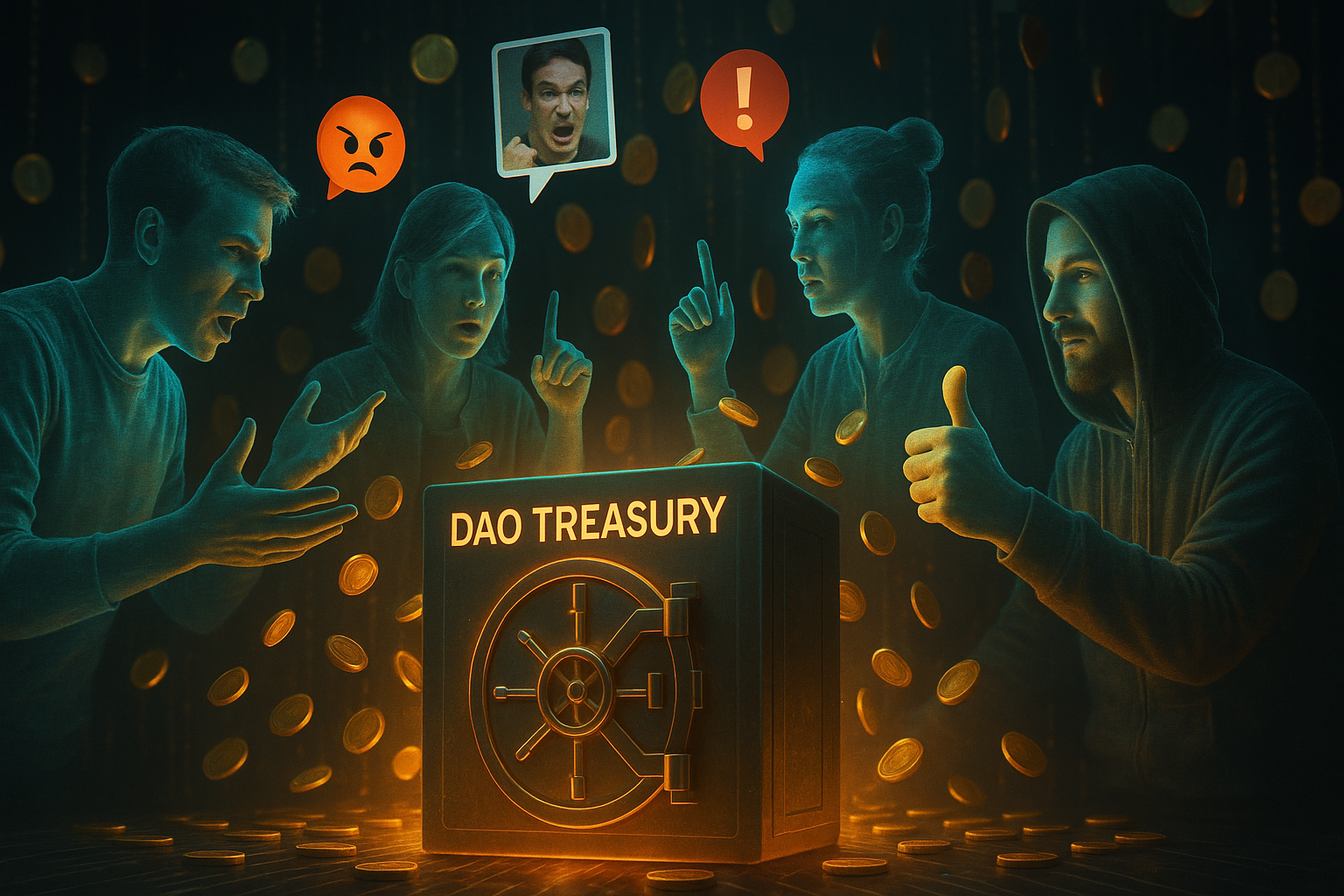
The Inevitable Truth About DAOs
Ah, DAOs. The crypto industry’s attempt to prove that democracy can work on the blockchain—because it clearly hasn’t worked anywhere else.
You’ve probably heard the term DAO (Decentralized Autonomous Organization) thrown around like a buzzword at a tech conference with too much coffee and too little accountability. It sounds complicated, futuristic, and slightly cultish. But strip away the jargon, and you’ll find something surprisingly simple: a DAO is just a group chat with a shared wallet.
And honestly? That’s okay.
In fact, it’s genius. DAOs take the chaos of human decision-making and sprinkle just enough blockchain magic on top to make it look organized. Let’s unpack how these “digital democracies” work, why they matter, and how they somehow manage to be both the future of collaboration and a perfect recipe for internet drama.

What the Hell Is a DAO?
Let’s keep it simple:
A DAO (Decentralized Autonomous Organization) is a group of people making decisions together using blockchain-based rules.
Think of it as a mix between:
- A Discord server,
- A bank account, and
- A constitution written in smart contracts instead of Word documents.
Members vote on decisions using tokens, smart contracts execute those votes automatically, and all activity is recorded on the blockchain—meaning no one can “accidentally” spend the treasury on meme coins.
(Well… they still can. But at least now it’s publicly documented idiocy.)
Why Everyone’s Suddenly Obsessed With DAOs
Crypto loves to reinvent things that already exist—like calling art “NFTs,” or calling loans “DeFi.” DAOs are no exception. They’re basically the blockchain’s version of:
- Clubs → but without presidents or awkward elections.
- Companies → but without HR or coffee machines.
- Democracies → but without politicians (just slightly less corrupt).
The appeal? Transparency and collective ownership.
Everyone gets a vote, decisions are encoded into smart contracts, and the money moves automatically based on those votes.
It’s like a digital co-op, but with less paperwork and way more memes.
The DAO Origin Story: From Utopia to Lawsuit
The first major DAO appeared in 2016—creatively called The DAO. It raised $150 million in ETH. Then, in true crypto fashion, someone found a bug in the code and stole $60 million.
Cue existential crisis.
Ethereum had to hard-fork (basically reboot reality) to undo the hack. The event became both a cautionary tale and a cornerstone of DAO culture: great ideas, occasionally derailed by human error and hubris.
But the concept didn’t die. It evolved. Today, DAOs run investment funds, gaming guilds, art collectives, and even charities. The technology got better. The jokes stayed the same.
How DAOs Actually Work (Without the Tech Headache)
Let’s pretend you’re joining a DAO. Here’s how it usually goes:
- Buy the DAO’s token.
Congratulations—you’re now a “member.” It’s like buying stock, except you can also vote on stuff. - Vote on proposals.
Want to fund a new project? Change the logo? Buy a yacht? Members vote using their tokens. - Smart contracts handle the rest.
If a proposal passes, the code automatically executes it. No CEO approval needed. - Transparency is built in.
Every transaction, vote, and argument is visible on-chain. Basically, it’s like having your company meetings broadcast live—without makeup or filters.
It’s democracy… if democracy had a ledger and fewer campaign ads.
Why “Group Chat With a Treasury” Isn’t an Insult
Calling DAOs “group chats with money” might sound dismissive, but it’s actually their superpower.
Humans have always organized in groups—families, tribes, clubs, cults. DAOs just take that instinct, digitize it, and make it financially accountable.
Because let’s be honest: every group project falls apart when someone asks, “Who’s paying for this?”
DAOs fix that. They embed the wallet into the chat.
It’s like having a built-in accountant who doesn’t need coffee breaks—or forgiveness.
The Psychological Trap of Voting Power
Here’s where it gets spicy. In many DAOs, voting power depends on how many tokens you own. More tokens = louder voice.
So, in theory, it’s democratic.
In practice, it’s just capitalism with extra steps.
The whales call it “governance.” Everyone else calls it “being outvoted by billionaires.”
But that’s okay. It’s still progress. DAOs make power visible. You can literally see who’s running the show—no need for investigative journalism.
The DAO Spectrum: From Idealists to Degens
There are two main species of DAO participants:
- The Idealists – They quote whitepapers, dream of decentralization, and believe voting on-chain will solve human inequality.
- The Degens – They joined for the memes, vote for chaos, and accidentally turn a $10k treasury into $2k and a Gucci NFT.
And yet, both are essential. Idealists bring vision. Degens bring energy. The mix creates innovation—plus a touch of existential comedy.
Famous DAO Examples (and Their Glorious Chaos)
- Uniswap DAO – Governs one of the largest decentralized exchanges. Members vote on fee changes, development budgets, and how to spend a treasury worth billions.
- ENS DAO – Controls Ethereum Name Service, basically the internet’s attempt to make wallet addresses pronounceable.
- Friends With Benefits – A social DAO for creatives and Web3 nerds. Imagine Soho House, but digital—and somehow even more pretentious.
- ConstitutionDAO – Raised $47 million to buy a copy of the U.S. Constitution. Lost to a billionaire. Still hilarious.
Each one showcases the same principle: community coordination powered by code—and just enough chaos to keep it interesting.
Why DAOs Actually Matter
Let’s drop the jokes for a second. DAOs matter because they represent a new model of organization—one that doesn’t rely on borders, CEOs, or bureaucracies.
They enable:
- Global collaboration without legal red tape.
- Shared ownership of digital and real-world assets.
- Automated trust, where code replaces lawyers.
Whether you’re investing, creating art, or funding climate research, DAOs turn the “crowd” into a functioning entity—with a wallet.
That’s revolutionary.
And also slightly terrifying.
The Dark Side: Drama, Hacks, and Voter Apathy
Every paradise has its problems.
- Voter apathy: Most DAO members never vote. Turns out “decentralized governance” sounds fun until you realize it means reading 15 proposals a week.
- Security risks: One bad line of code, and your treasury becomes a hacker’s snack.
- Coordination chaos: Without leaders, decision-making can feel like herding cats—on caffeine.
But these aren’t deal-breakers. They’re growing pains. Every innovation goes through a messy adolescence phase. (Looking at you, Internet Explorer.)
The Real Power of DAOs: Incentivized Belonging
Here’s where DAOs truly shine—they give people skin in the game.
You’re not just a user or employee; you’re an owner. That changes everything. It turns apathy into engagement and engagement into impact.
When your vote affects the treasury—and your token bag—you start caring real fast. Suddenly, “community meeting” sounds less boring.
DAOs make belonging profitable. It’s capitalism with a conscience (or at least a nice spreadsheet).
Why “That’s OK” Is the Perfect Summary
Let’s circle back to the headline: DAOs Are Just Group Chats With a Treasury—And That’s OK.
Because it is.
Not every innovation has to be world-changing to be worthwhile. Some just make coordination slightly less stupid.
DAOs don’t eliminate human flaws—they document them in real time. Every misstep, every argument, every hilarious treasury mishap is etched into blockchain history.
That’s transparency. That’s progress. And let’s face it—it’s great entertainment.
Final Word
DAOs prove one thing: humans will always find a way to argue, even with perfect technology. But they also show that collective ownership works, especially when everyone’s money is on the line.
So yes, DAOs are just fancy group chats with a shared wallet. But they’re also digital democracies in training—figuring out how to cooperate without central authority or coffee breaks.
And honestly? That’s the most human thing of all.
Ready to Explore the Future of Crypto Communities?
Curious about where DAOs, blockchain, and crypto are really heading?
Dive into more witty, insightful, and painfully honest crypto analysis at CryptoCrate.org—where humor meets high-IQ blockchain breakdowns.
Because understanding crypto shouldn’t feel like reading a tax form written by robots.

FAQs
1. What is a DAO in simple terms?
A DAO is a digital organization run by smart contracts where members vote on decisions using crypto tokens. Think of it as a blockchain-based co-op or group chat with funds.
2. Are DAOs legally recognized?
Some are—Wyoming, for example, grants DAOs limited liability status. But most still operate in a legal gray area.
3. How do you join a DAO?
Buy or earn its governance token, join the community (usually Discord), and start voting on proposals.
4. Are DAOs safe?
Not always. While smart contracts reduce human error, they’re still vulnerable to bugs, hacks, and… human error in coding.
5. Why do DAOs matter?
They enable decentralized collaboration, letting people coordinate globally and transparently—without needing corporations or middlemen.
Leave a Reply