Introduction: Why Blockchain Suddenly Sounds Important
You’ve probably heard about blockchain. Banks talk about it. Tech bros brag about it. Your cousin who still loses his keys swears it will make him rich. But what is it exactly? Blockchain is a type of digital ledger. Imagine a notebook that everyone can read but no one can cheat. Every transaction, every step, gets recorded permanently. You can’t rip out pages, erase lines, or bribe the librarian.
That’s blockchain. In 2026, blockchain isn’t just a buzzword. It powers cryptocurrencies, smart contracts, and even digital collectibles. It’s practical, confusing, and kind of like magic, but math makes it work. Learning it now means you stop pretending you understand memes like Bitcoin or Ethereum. You become the person people actually ask when they hear “blockchain.”
This guide will break it down, step by step. You’ll learn how blockchain works, its key parts, why it matters, and how beginners can use it without looking like a complete idiot. By the end, you’ll understand blockchain like you understand your bank app, except this time, nobody can freeze your account for forgetting a password.
What Is Blockchain?
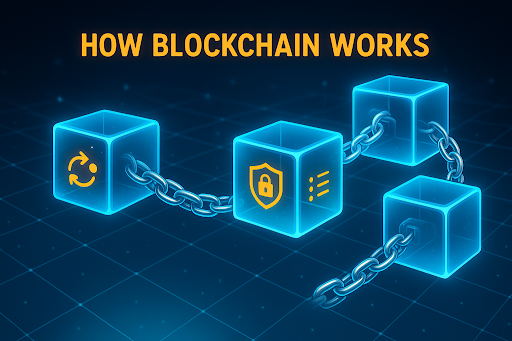
Blockchain is a digital ledger. That’s all it is, but don’t underestimate it. It’s the backbone of cryptocurrencies and modern decentralized systems. It stores data in blocks, each linked to the one before it. Think of it as a chain of safe deposit boxes. Once you lock something inside, you can’t open it without the key, and everyone else has a copy of the key, too. Nobody can cheat. No bank, no government, no shady accountant. Key characteristics of blockchain:
- Decentralized: No single person controls it. It’s run by a network of computers.
- Immutable: Once data is written, it can’t be erased.
- Transparent: Everyone can see transactions, but personal info stays hidden.
- Secure: Cryptography keeps it safe. Hackers usually fail spectacularly.
Blockchain isn’t just a nerdy ledger. It’s a trust machine. You can send money, record agreements, and track assets without intermediaries. For beginners, understanding blockchain means you know how money, contracts, and digital assets move in 2026. You no longer have to nod at tech conversations while secretly Googling “what is a block in blockchain?” You will know, and you’ll know enough to sound slightly smarter than your friends.
How Blockchain Works Step by Step
Blockchain works in a surprisingly simple way, if you ignore the hype and the tech jargon. Each transaction goes through the network of computers. These computers, called nodes, verify the transaction. Once verified, it gets bundled into a block. Each block links to the previous one using cryptography. That’s why it’s called a blockchain. Nobody can cheat the chain without breaking all subsequent blocks, which is basically impossible. Step-by-step process:
- Transaction initiation: You send crypto or record data.
- Verification: Nodes check the transaction against the ledger.
- Block creation: Verified transactions get grouped into a new block.
- Linking: The new block connects to the previous block, forming a chain.
- Confirmation: Network agrees on the chain. The transaction becomes permanent.
Every step happens without a central authority. You don’t need a bank clerk or government official. You don’t even need your neighbor to understand it. The beauty is that blockchain combines security, transparency, and decentralization.
It allows cryptocurrencies like Bitcoin to exist, smart contracts to execute automatically, and digital assets to be tracked reliably. Understanding this step-by-step process makes blockchain less mystical and more practical. Beginners realize it’s powerful, simple in principle, and impossible to ignore if they care about digital finance.
Why Blockchain Matters in 2026
Blockchain isn’t a hobby anymore. It’s everywhere. Companies use it for secure payments. Governments experiment with digital currencies. Banks explore faster, safer transactions. If you understand blockchain, you understand the future of finance. Key reasons blockchain matters:
- Trust without banks: Peer-to-peer transactions don’t need middlemen.
- Security: Cryptography makes hacking extremely difficult.
- Transparency: All transactions are publicly verifiable.
- Automation: Smart contracts execute automatically, no lawyers needed.
- Global reach: Money and data move instantly across borders.
For beginners, this matters because blockchain gives control back to users. You don’t have to trust big banks or third parties blindly. You can transact, track, and verify information yourself. This isn’t theory. It’s happening now. From cryptocurrencies to supply chain management, blockchain solves real-world problems.
Understanding it gives you insight, confidence, and the ability to make smarter decisions about money and digital assets. By 2026, blockchain literacy isn’t optional. It’s survival in a world where digital transactions dominate.

Real Benefits and Risks for Beginners
Blockchain is powerful, but it’s not perfect. You get advantages, but you also face risks. Beginners must know both sides. Benefits:
- Fast, borderless transactions: Send money globally in minutes.
- Low fees: Fewer middlemen means fewer charges.
- Transparency: Track assets and contracts clearly.
- Programmable money: Smart contracts automate agreements.
Risks: - Volatility: Cryptocurrencies move like rollercoasters on fire.
- Loss of keys: Lose your private key, lose your money forever.
- Scams: Some projects are too good to be true — usually are.
- Regulation uncertainty: Rules change, sometimes overnight.
Knowing benefits and risks lets beginners act safely. You can experiment, invest, or transact without panicking every time Bitcoin dips or Ethereum surges. The trick is to respect the system, not fear it.
How Beginners Can Start Using Blockchain
Starting with blockchain doesn’t have to be terrifying. Beginners should follow simple steps:
- Learn first: Understand how blocks, transactions, and wallets work.
- Start small: Try small transactions or test cryptocurrencies.
- Use trusted wallets and exchanges: Safety first.
- Keep backups: Your private keys are your responsibility.
- Stay informed: Regulations, technology updates, and scams evolve fast.
Think of blockchain like learning to ride a very fast, slightly unpredictable bike. Take it slow, respect the rules, and enjoy the ride. You’ll gain confidence, knowledge, and maybe bragging rights at parties when someone asks about NFTs or Bitcoin.
Final Thoughts: Should You Learn Blockchain?
Yes, beginners should learn blockchain. It’s practical, relevant, and increasingly unavoidable. Start simple, understand the steps, respect risks, and you’ll navigate digital finance confidently. Don’t get intimidated by tech jargon or flashy headlines. Blockchain explained simply for beginners is not magic, it’s logic, math, and verification.
By understanding it now, you prepare for the digital world of 2026 and beyond. And remember, being slightly smarter than your friends who “think blockchain is just Bitcoin” is a perfectly valid motivation.

👉 Want the smart breakdown without the jargon? Head over to CryptoCrate.org — where crypto is explained without turning you into that guy at parties.
Frequently Asked Questions
Q: What is blockchain?
A: A digital ledger that stores data in linked blocks. Secure, transparent, and decentralized.
Q: How does blockchain work?
A: Transactions get verified by nodes, grouped into blocks, and linked to form a chain.
Q: Why does blockchain matter?
A: It provides trust, security, transparency, and global access for digital transactions.
Q: What are blockchain risks?
A: Volatility, scams, lost keys, and changing regulations.
Q: How can beginners start using blockchain?
A: Learn basics, start small, use trusted wallets, backup keys, and stay updated.
Leave a Reply